
Spring Training is an exciting time for fans, the possibilities are endless about what can transpire over the next 6 months of baseball. For rebuilding teams like the Pirates, Spring Training can give fans a glance at the prospects and players the organization has been promising will help the team become a winner. In the case of the 2024 Pirates, those exciting players are going to fall into the pitching category. 8 of the top 10 Pirates prospects are pitching prospects and the organization is banking on these pitchers to bring the team to the playoffs. In the brief time we’ve had Spring Training games, we’ve seen 2 pitchers emerge with electrifying stuff that rightfully has made fans excited; however, unless adjustments are made these pitchers are going to be frustrating for never fully realizing their pitching potential.
When baseball people talk about pitcher command, usually the first assumption is the pitcher allows too many walks. This is only part of the equation. While preventing walks is vitally important to a pitcher’s success (unless you’re Blake Snell and the walks are a feature instead of a bug), what is arguably more important is being able to locate pitches in ideal parts of the zone. I got to watch Luis Ortiz and Jared Jones pitch in the first week of Spring Training games. The 2 thoughts going through my head were “Wow this stuff is filthy” and “Why on earth aren’t they missing more bats?” This is what led to writing this article because the research into this shows that while the stuff for both of these pitchers is MLB level, how they use and locate their stuff is going to keep them away from being the starters the Pirates need.
Luis Ortiz
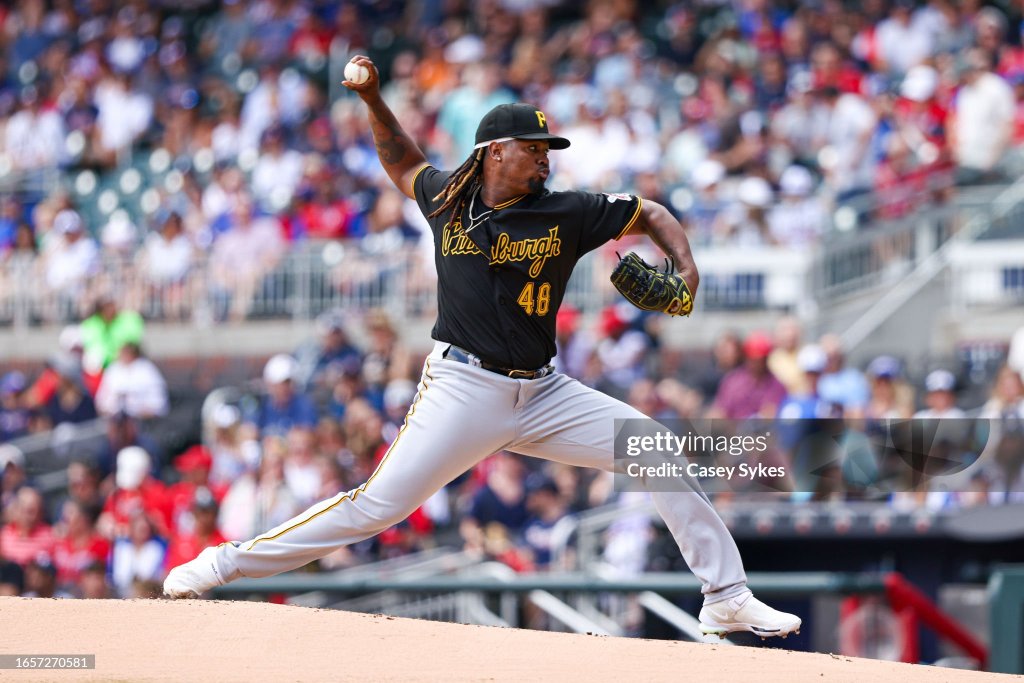
Luis Ortiz was a name very few fans knew before he burst onto the scene in 2022. Ortiz was rated for his nasty fastball/slider combination that would have hitters struggling to catch up with. Baseball Savant compares his stuff to pitchers like Sandy Alcantara, Luis Castillo, and Hunter Greene.

Ortiz has not had the success of these other pitchers, despite having some objectively nasty stuff that should play in the major leagues. The objection most raised about Ortiz is that he doesn’t have a third pitch to keep batters on their toes; however, the issue I find is that he is not utilizing his unicorn pitches to his full extent. His sinker was a +9 run value in the majors last year, which is absolutely fantastic. It’s starting to take the place of his fastball which got murdered by batters in 2023; however, the sinker doesn’t miss that many bats at all like his fastball. This simply should not happen when the pitch is this nasty.
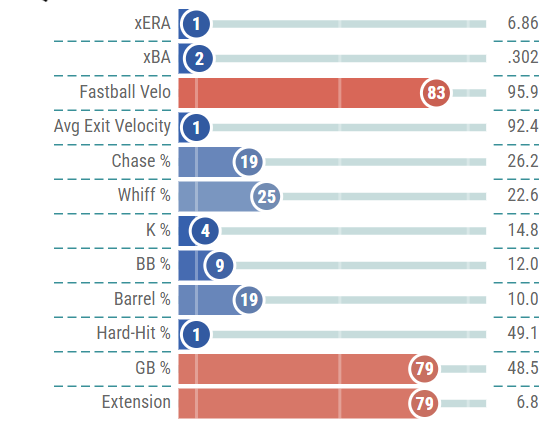
These two images should not be side by side with one another, especially since Ortiz gets a respectable 31% whiff rate on his slider already. If Ortiz has two devastating pitches that are objectively top-tier pitches, why is he getting barreled so hard while also not missing bats? This isn’t a problem unique to the major leagues; Ortiz’s whiff rates on the same pitches are close to identical during his time in AAA in 2023.


The key thing to note here is the whiff rate and the exit velocity off these pitches. The slider misses plenty of bats but doesn’t generate as much chase as you would like. The sinker and fastball simply don’t miss enough bats; with the sinker, it can work especially if it limits hard contact. However, if you want to be generating strikeouts with your 98-100 mph fastball and sinker combination, pitching to contact is much riskier. The conclusion I’ve come to is that it does not matter how nasty your stuff is when you cannot locate it in ideal places. MLB Hitters are too good to whiff at pitches with elite stuff if they get the pitches down the middle. With Ortiz, the pitches are coming right down the pipe, negative the effects of his stuff. Here are the heatmaps for the average location of his three main pitches from last year:

It doesn’t take being a pitching genius to see what the issue is with Ortiz. He’s leaving his fastball and sinker over the heart of the zone on a consistent basis. Luis is struggling massively to place these pitches anywhere but out of the strike zone or right down the middle of the plate. This allows hitters to sit back and wait for their pitch and give it a drive since they know they aren’t going to get pitches on the edge of the zone. The slider gets the 31% whiff rate because it can dance on the edge of the zone and its movement allows him to get guys to chase the stuff. Working with one pitch can work for 1-2 innings but will never be sustainable for a starter long-term. This is arguably the biggest reason why his stats in the minors never looked all that impressive; elite stuff means nothing if you’re making it easy for the batter to barrel up.
Jared Jones

Jared Jones is another Pirates flamethrower who always has had the stuff to be a good pitcher but has not translated to the minors as well outside of his 45-inning stint in AA where he dominated. Jones has been one of the biggest highlights at Pirates Spring Training in 2024 despite only pitching 3 innings because of how his stuff has looked.
The first thing I’ll note is that the slider is absolutely filthy. Nearly every time Jones has recorded a whiff in Spring Training, it’s been because of his slider. It is very encouraging to see his money pitch jump in Stuff+ and Horizontal Break, and as the Spring continues, I want to see more of it. His numbers at AAA last season suggest that his slider has been his carrying pitch and that his fastball has good stuff but is lagging behind in terms of efficiency.

His slider not only generates crazy amounts of whiffs, but when hitters do make contact the contact is often very soft, averaging out at 85 mph. This is fantastic, but Jones cannot be an MLB starter if the slider is the only plus pitch he has in his arsenal. The fastball has wicked movement to it, which is why it’s disappointing to see it hit so hard so often. Like Ortiz, this is a matter of where Jones is placing his fastball in the zone. Hunter Greene has already been used as an example but I’m going to use him again because he’s exemplary of this at the MLB level. Greene’s fastball can get killed because he hasn’t found a way to consistently locate it and he struggles with effective secondary pitches. Jones has the big secondary pitch, but until he is able to locate his fastball his ceiling is going to be capped.
We don’t have quite the data that we have for Ortiz in terms of zone placement, but for this example using Jones’ Spring Training appearances seems to illustrate what I’m talking about. To preface, I’m aware that Spring Training games are about pitchers adjusting to participating in live games. This is not trying to tear down Jones because his location wasn’t exact on March 28th. Instead, it is to highlight a trend that is going on in the minors that I believe explains why his numbers aren’t as gaudy as they should be and why his fastball has been getting hit hard.

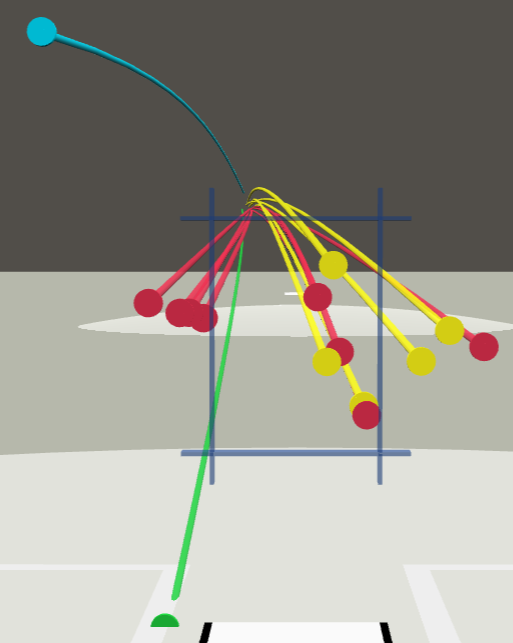
You can see the slider has a consistent placement and movement within the zone, while the fastball is kind of all over the place with the location. What makes a pitcher like Paul Skenes so good isn’t just his stuff, but his ability to place his 100 mph wherever he wants to: usually up in the zone where it is harder for hitters to make solid contact. It is only 2 spring training starts, but I think these graphs show that Jones struggles to locate his fastball on a consistent basis. I’ve used the Greene comparison, but I’ll end with this one. Johan Oviedo also has a killer slider, but every Pirates fan who watched him pitch in 2023 knew how south things would go when he had no fastball command. Jones has the stuff to be better than Oviedo, but he needs to spend his time in AAA fine-tuning his fastball into being a devastating pitch that it deserves.
 North Shore Nine
Leave a comment